
Difference Between Laser Eye Surgery and Contact Lens Use?
If you’re tired of wearing glasses, you’ve probably wondered about the difference between laser eye surgery and contact lens use? Both can give you clear vision, but they work in very different ways and suit different lifestyles. As an eye specialist, Dr. Ruchika Kedia helps patients in Thane understand which option is safer, more convenient, and better for long‑term eye health. In this blog, you’ll learn how each option works, their pros and cons, and when it makes sense to consider permanent vision correction.
What Is Laser Eye Surgery?
Laser eye surgery (commonly called LASIK) is a medical procedure that reshapes the clear front surface of your eye (the cornea) using a precise laser. The aim is to correct common refractive errors such as myopia (nearsightedness), hypermetropia (farsightedness), and astigmatism. Once the cornea is reshaped, light focuses properly on the retina, giving you clearer vision without glasses or contact lenses.
The procedure is usually quick, often completed within 15–20 minutes for both eyes. Most patients notice improved vision within 24 hours. With modern lasik laser treatment safety and accuracy have significantly improved, and recovery time is relatively short compared to older techniques.
What Are Contact Lenses?
Contact lenses are thin, curved lenses that sit directly on the surface of your eye. They are available as daily, bi‑weekly, or monthly disposables, and can correct the same refractive errors as glasses and laser surgery. Many people like contact lenses because they provide a natural field of view and are nearly invisible.
However, contact lenses require strict hygiene and regular replacement. If not cleaned or worn properly, they can lead to infections, allergies, dry eyes, or corneal damage. Unlike laser surgery, which is a one‑time procedure, contact lenses involve ongoing maintenance and lifetime expenses.
Benefits of Laser Eye Surgery
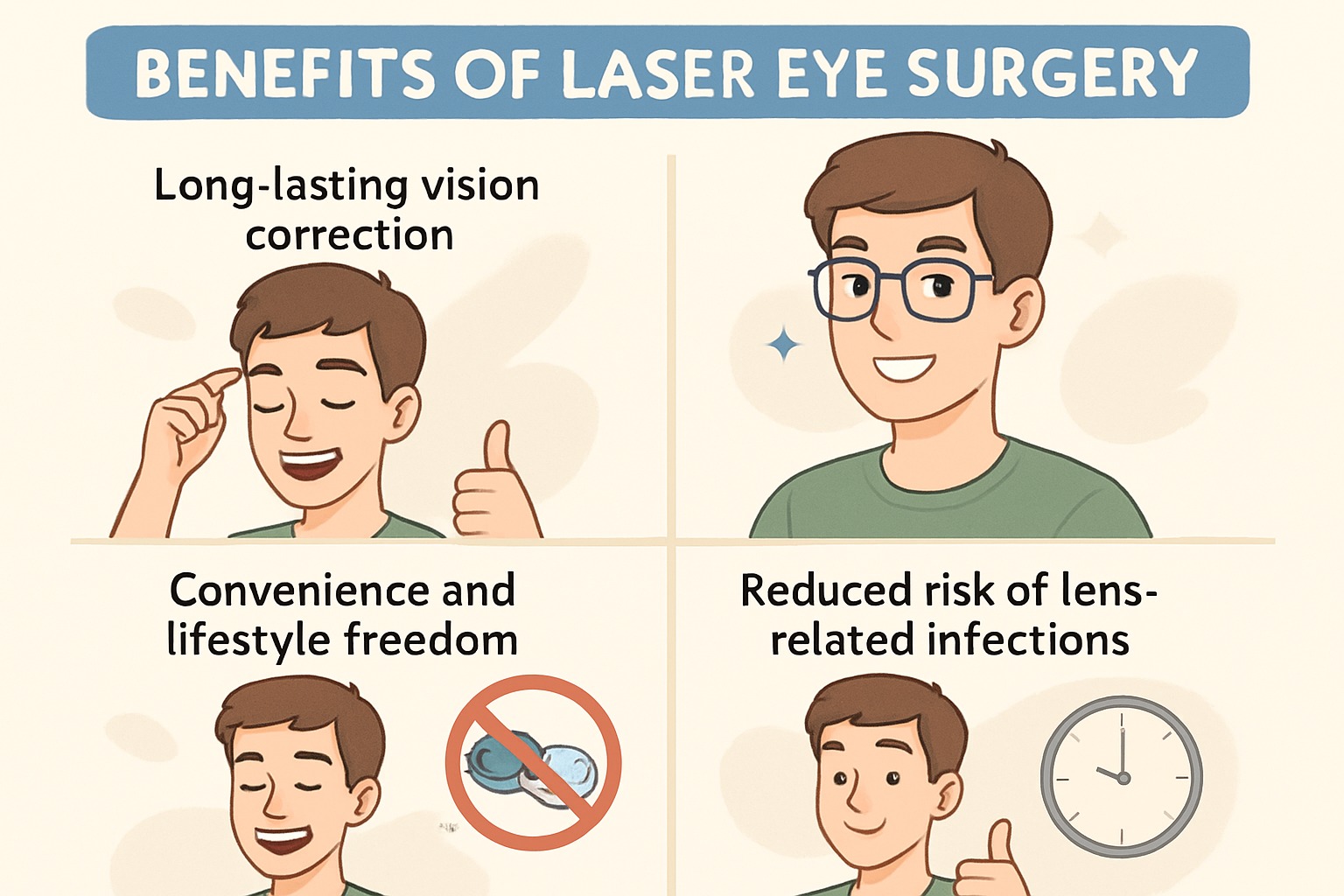
Laser eye surgery offers several long‑term advantages that attract people who want more freedom from glasses or lenses:
- Long‑lasting vision correction
For most suitable candidates, results of lasik eye surgery in Thane can be stable for many years. While normal age‑related changes like presbyopia can still occur later, the basic refractive error often remains corrected.
- Convenience and lifestyle freedom
After recovery, you don’t need to insert, remove, or clean lenses daily. This is especially helpful if you swim, play sports, travel frequently, or work in dusty or busy environments.
- Reduced risk of lens‑related infections
Many eye infections seen in clinic are linked to improper contact lens use. By eliminating daily lens wear, laser surgery can reduce these specific risks.
- Fast recovery and minimal downtime
With modern techniques, patients often return to regular activities within a few days, provided they follow all post‑operative instructions from their _lasik laser eye surgeon in thane_.
Drawbacks and Considerations of Laser Eye Surgery
Despite its benefits, laser vision correction is not right for everyone. Some important points to consider:
- Not reversible
Once the cornea is reshaped, it cannot be restored to its exact original state. Enhancements are sometimes possible, but the basic change is permanent.
- Possible side effects
Temporary dryness, glare, halos around lights at night, or fluctuating vision can occur, especially in the first few weeks. Serious complications are rare but must be discussed honestly with your surgeon.
- Suitability criteria
Your corneal thickness, eye power stability, existing eye conditions, general health, and age must be evaluated. This is why a detailed check‑up with an Eye Specialist doctor in Thane like Dr. Ruchika Kedia is essential before deciding on surgery.
Benefits of Contact Lens Use
Contact lenses remain a good option for many people, particularly those who are not ready or not fit for surgery:
- Non‑surgical and reversible
You can simply stop wearing lenses if you face discomfort or want to switch back to glasses. There is no permanent change to the eye structure.
- Flexible vision options
Contact lenses are available in many designs: soft, rigid gas permeable, toric (for astigmatism), and multifocal lenses. This allows customization according to your visual needs.
- Good for certain medical conditions
In specific cases, such as irregular corneas or certain corneal diseases, specially designed lenses may give better vision than glasses or standard surgery.
- Cost spread over time
The initial cost is low compared to surgery, although the cumulative expense over years can become significant.
Contact Lens Use
Even though contact lenses are popular, they come with their own set of challenges:
- Infection risk
Poor hygiene, sleeping in lenses, or using them longer than recommended can increase the risk of corneal infections, ulcers, and scarring. These can be vision‑threatening in severe cases.
- Ongoing cost and effort
Solution, lens replacement, and follow‑up visits add up over time. For many people, the total expense over several years can be higher than a one‑time cost of lasik surgery
- Dryness and discomfort
Long screen time, air‑conditioned environments, or dusty settings can worsen dryness and irritation in contact lens wearers.
- Not ideal for everyone
People with allergies, very dry eyes, or certain occupations may find it hard to wear lenses comfortably all day.
Key Differences: Laser Eye Surgery vs Contact Lenses
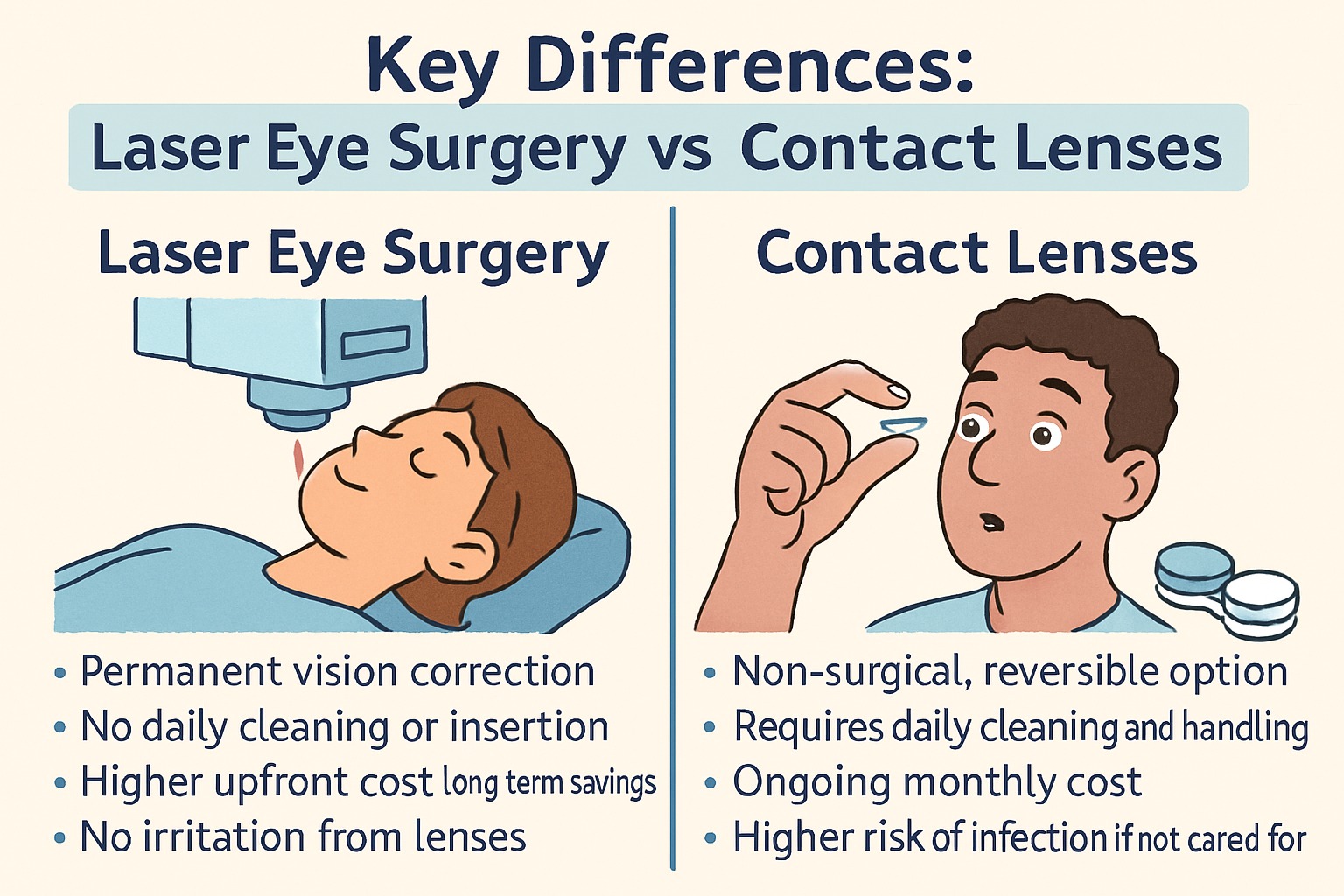
To understand the practical difference between laser eye surgery and contact lens use, it helps to compare them across key aspects:
- Duration of effect
- Laser surgery: One‑time procedure with long‑lasting results for most eligible patients.
- Contact lenses: Work only while you are wearing them.
- Daily maintenance
- Laser surgery: After healing, there is minimal daily maintenance beyond routine eye care.
- Contact lenses: Need cleaning, disinfection, and careful handling every single day.
- Health and safety
- Laser surgery: Involves surgical risk but reduces daily lens‑related infection risk in the long term.
- Contact lenses: No surgery, but higher ongoing risk of infection if hygiene is poor.
- Lifestyle impact
- Laser surgery: Very convenient for active people, travelers, and those who dislike lens care.
- Contact lenses: Convenient compared to glasses, but can be troublesome during swimming, overnight travel, or when tired.
- Cost structure
- Laser surgery: One‑time investment, which can be planned with your laser operation in Thane provider.
- Contact lenses: Lower initial cost but recurring expenditure year after year.
Who Is a Good Candidate for Laser Eye Surgery?
You may be a good candidate for laser treatment for eyes in Thane if:
- Your eye power has been stable for at least 1–2 years.
- You do not have uncontrolled diabetes, autoimmune disease, or severe dry eyes.
- Your corneas are of adequate thickness and shape.
- You are motivated to reduce or eliminate dependence on glasses or lenses.
A detailed pre‑surgery evaluation with a lasik laser eye Specialist doctor in thane like Dr. Ruchika Kedia is the safest way to know if laser correction is right for you. Advanced diagnostic tests, corneal mapping, and a thorough eye health assessment are done before recommending any procedure.
Cost of LASIK for High Power in India
When Are Contact Lenses a Better Choice?
Contact lenses may be more suitable if:
- You are underage or your eye power is still changing.
- You are pregnant or breastfeeding, when hormonal changes can affect vision temporarily.
- You have certain corneal disorders or medical conditions that make surgery unsafe.
- You simply prefer a non‑surgical, reversible solution for now.
In such cases, lenses can be used safely under proper guidance from an Best eye specialist near me
How to Decide: Talk to a Specialist
Choosing between laser surgery and contact lenses is not just a cosmetic decision; it’s a medical one. The right option depends on your eye health, lifestyle, budget, and long‑term visual goals. An in‑clinic consultation allows your doctor to examine your eyes, understand your daily routine, and explain realistic expectations from both treatments.
If you are exploring lasik eye surgery it is important to visit a trained and experienced specialist who uses modern technology and follows strict safety protocols. During your consultation, feel free to ask about the procedure steps, recovery time, possible side effects, and follow‑up care.
Both laser eye surgery and contact lenses can provide clear vision, but they differ significantly in permanence, maintenance, safety profile, and long‑term cost. Laser surgery offers a one‑time, long‑term solution and greater freedom from daily lens care, while contact lenses provide a flexible, non‑surgical alternative that can be stopped anytime. The best way to choose is to get a thorough check‑up and personalized advice from a trusted lasik eye surgeon in thane like Dr. Ruchika Kedia, who can guide you toward the safest and most suitable option for your eyes.