
What Causes Sudden Blurry Vision?
Sudden blurry vision can be worrying, especially when your eyesight becomes unclear without warning. What Causes Sudden Blurry Vision? The answer can range from simple problems such as dry eyes or an incorrect glasses prescription to more serious conditions affecting the retina, optic nerve, or brain. Because sudden vision changes can sometimes require urgent treatment, it is important not to ignore them.
If blurry vision appears suddenly, especially in one eye, or happens with pain, redness, flashes, weakness, or severe headache, you should seek medical attention promptly. An eye specialist can examine your eyes and identify the underlying cause.
What Is Sudden Blurry Vision?
Blurry vision means objects may look unclear, hazy, distorted, or out of focus. It may affect one eye or both eyes and can happen for a few minutes or continue for several hours or days.
Sometimes the cause is temporary and easy to treat. However, sudden changes in vision can also be linked to eye emergencies. A comprehensive eye examination is often needed to understand what is happening.
Who Is More Likely to Experience Halos?
You may have a higher risk if you:
- Are above 50 years of age
- Have cataracts
- Have glaucoma
- Wear an outdated spectacle prescription
- Have diabetes
- Spend long hours on digital screens
- Have chronic dry eyes
Regular eye check-ups can help detect these conditions early.
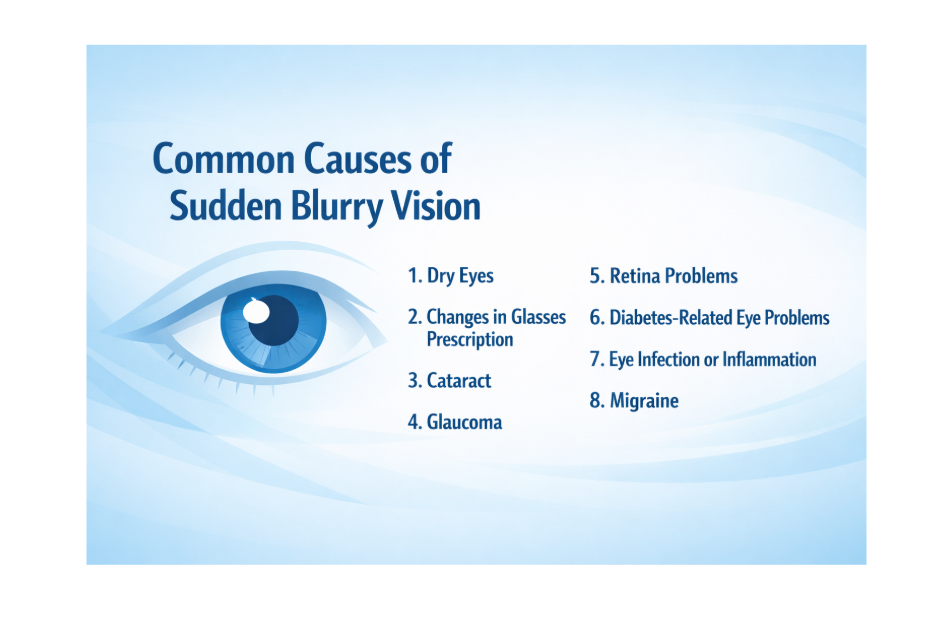
Common Causes of Sudden Blurry Vision
There are several possible reasons why your vision may suddenly become blurry.
1. Dry Eyes
Dry eyes are a common cause of temporary blurry vision. When your eyes do not produce enough tears or tears evaporate too quickly, the surface of the eye may become irritated. This can make your vision fluctuate, particularly after prolonged screen use.
Blinking regularly, taking screen breaks, and using doctor-recommended eye drops may help. However, persistent symptoms should be checked by an eye specialist.
2. Changes in Glasses Prescription
A change in your refractive error can make objects appear blurred. Nearsightedness, farsightedness, astigmatism, and age-related changes in near vision can all affect visual clarity. Refractive errors are commonly associated with blurred vision and can usually be diagnosed during an eye examination.
If your glasses no longer provide clear vision, an updated prescription may be required.
3. Cataract
A cataract develops when the normally clear lens inside the eye becomes cloudy. Vision may gradually become blurry, hazy, or less sharp. Some people also experience glare or difficulty seeing clearly at night.
Although cataracts commonly develop slowly, a sudden noticeable change in vision should still be evaluated to rule out other eye problems.
4. Glaucoma
Glaucoma damages the optic nerve and can eventually lead to permanent vision loss. The most common form, open-angle glaucoma, often develops slowly without obvious early symptoms.
However, acute angle-closure glaucoma can cause sudden blurry vision along with intense eye pain, a red eye, nausea, and other symptoms. This is an eye emergency and requires immediate medical attention.
People who are concerned about their eye pressure or glaucoma risk should undergo regular comprehensive eye examinations. Early diagnosis and treatment can help protect vision.
5. Retina Problems
The retina is the light-sensitive tissue at the back of the eye. Problems affecting the retina can cause sudden changes in vision.
For example, retinal vein occlusion can cause blurry vision or sudden vision loss, usually affecting one eye. Early assessment and treatment may help reduce the risk of further vision problems.
Flashes of light, many new floaters, or a dark curtain or shadow across your vision should never be ignored.
6. Diabetes-Related Eye Problems
People with diabetes can develop changes in the blood vessels of the retina. These changes may affect vision and can sometimes cause blurry or distorted sight.
Regular eye examinations are important for people with diabetes because some diabetic eye conditions may develop before noticeable symptoms appear.
7. Eye Infection or Inflammation
An infection or inflammation inside or around the eye can cause blurred vision. It may also be accompanied by redness, watering, discharge, pain, or sensitivity to light.
Some corneal conditions can cause blurry vision and require prompt examination, particularly when there is eye pain or significant redness.
8. Migraine
Some people experience temporary visual disturbances during a migraine. These may include blurred or distorted vision, flashing lights, zigzag patterns, or blind spots.
However, if you have never experienced these symptoms before, or if the visual change is sudden and unusual, it is safer to get medical advice rather than assuming it is a migraine.
When Is Sudden Blurry Vision an Emergency?
Sudden blurry vision should be taken seriously when it occurs with other warning signs. Seek urgent medical care if you experience:
- Sudden loss of vision in one or both eyes
- Severe eye pain
- A red and painful eye
- Flashes of light or a sudden increase in floaters
- A dark curtain or shadow across your vision
- Severe headache with vision changes
- Nausea or vomiting with eye pain and blurry vision
- Weakness or numbness on one side of the body
- Difficulty speaking, confusion, or facial weakness
Sudden blurred or lost vision can sometimes occur with stroke or transient ischemic attack symptoms, particularly when accompanied by weakness, speech problems, dizziness, or confusion.
Can Glaucoma Cause Sudden Blurry Vision?
Yes, certain forms of glaucoma can cause sudden blurry vision. Acute angle-closure glaucoma can develop quickly and may cause blurry vision together with severe eye pain, redness, nausea, and increased eye pressure. It requires immediate treatment to reduce the risk of permanent vision damage.
If you are looking for Glaucoma Treatment in Thane an eye specialist can evaluate your eye pressure, optic nerve, visual field, and other signs of glaucoma. Treatment depends on the type and severity of glaucoma and may include medicines, laser treatment, or surgery.
For people searching online for GlaucomaTreatment in thane it is important to choose care based on proper diagnosis rather than symptoms alone. Regular examinations are particularly important because glaucoma may have few or no noticeable symptoms in its early stages.
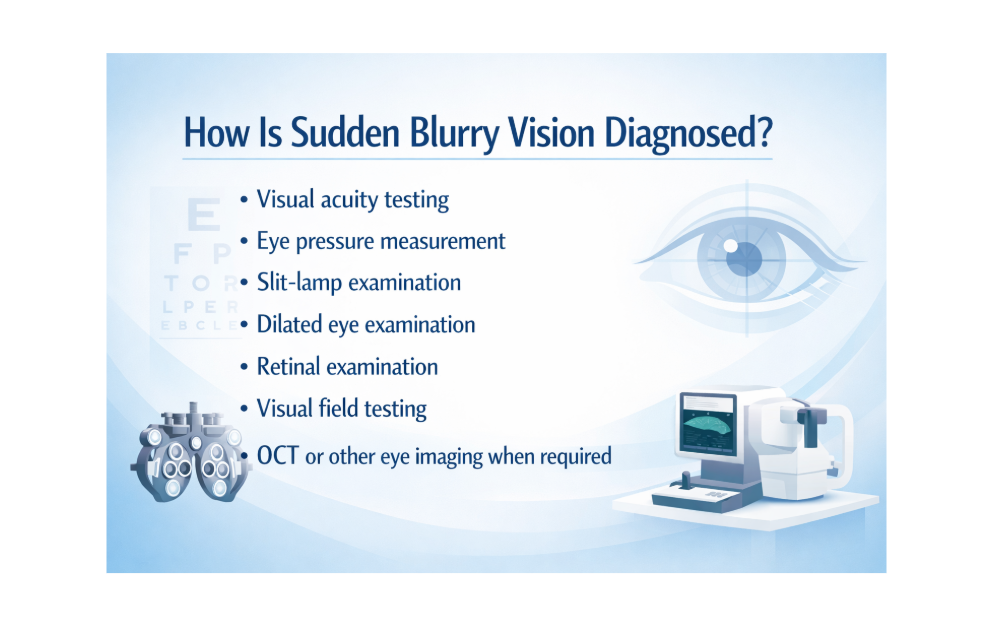
How Is Sudden Blurry Vision Diagnosed?
Your eye doctor may perform several tests depending on your symptoms. These can include:
- Visual acuity testing
- Eye pressure measurement
- Slit-lamp examination
- Dilated eye examination
- Retinal examination
- Visual field testing
- OCT or other eye imaging when required
A comprehensive eye examination can help identify conditions affecting the cornea, lens, retina, optic nerve, or other parts of the visual system. The National Eye Institute also recommends seeing an eye-care professional when vision becomes blurry or when you suspect an eye disease.
When Should You See an Eye Specialist in Thane?
If your blurry vision continues, keeps returning, affects only one eye, or is associated with pain or other unusual symptoms, schedule an eye examination. You can consult an Eye Specialist Doctor for a detailed evaluation and appropriate treatment.
Patients diagnosed with glaucoma may need regular monitoring. Depending on their condition, they may require evaluation by a Glaucoma Specialist Doctor in thane Some patients may also require treatment from a Glaucoma Surgeon in Thane when laser or surgical management is considered appropriate.
If you are researching Glaucoma treatment cost in Thane remember that the total cost can vary depending on the type of glaucoma, diagnostic tests, medicines, laser procedures, or surgery required. A consultation is the best way to understand the treatment options and expected costs for your specific condition.
How Can You Protect Your Vision?
You can support your eye health by:
- Getting regular eye examinations
- Managing diabetes and blood pressure
- Following your prescribed eye-drop routine
- Wearing protective eyewear when needed
- Taking regular breaks from digital screens
- Avoiding self-medication with eye drops
- Seeking prompt care for sudden vision changes
Regular eye examinations are especially important because some eye diseases can progress before noticeable symptoms appear.
Conclusion
Sudden blurry vision can have many causes, from dry eyes and changing glasses prescriptions to glaucoma, retinal problems, infections, or neurological conditions. The important thing is to identify the cause instead of ignoring the symptom. If you experience sudden or persistent changes in vision, consulting the best eye doctor can help ensure timely evaluation and appropriate treatment.
If blurry vision appears suddenly, especially with pain, redness, flashes, loss of vision, or neurological symptoms, seek medical attention without delay. For ongoing or unexplained vision changes, an eye examination can help detect the problem early and guide appropriate treatment.