
Is LASIK safe for those with high power numbers? Learn about the options and limitations
For people who depend heavily on thick glasses or strong contact lenses, the idea of permanent vision correction is life-changing. A common question we hear is Is LASIK safe for those with high power numbers? Learn about the options and limitations. High power vision can affect daily activities, confidence, and comfort and not everyone with strong prescription is automatically eligible for LASIK. Understanding safety, risks, and alternative options is essential before making a decision.
In this blog, Dr. Ruchika Kedia explains everything you need to know about LASIK for high power eyes in simple, patient-friendly language.
What Do “High Power Numbers” Mean in Vision?
High power refers to a stronger refractive error in the eyes. This usually includes:
- High myopia (nearsightedness) – generally above -6.00 diopters
- High hyperopia (farsightedness) – generally above +4.00 diopters
- Astigmatism – irregular curvature of the cornea measured as cylindrical power
Patients with high power often experience blurred vision without correction, eye strain, headaches, and dependence on thick lenses. These high values demand careful evaluation before laser vision correction.
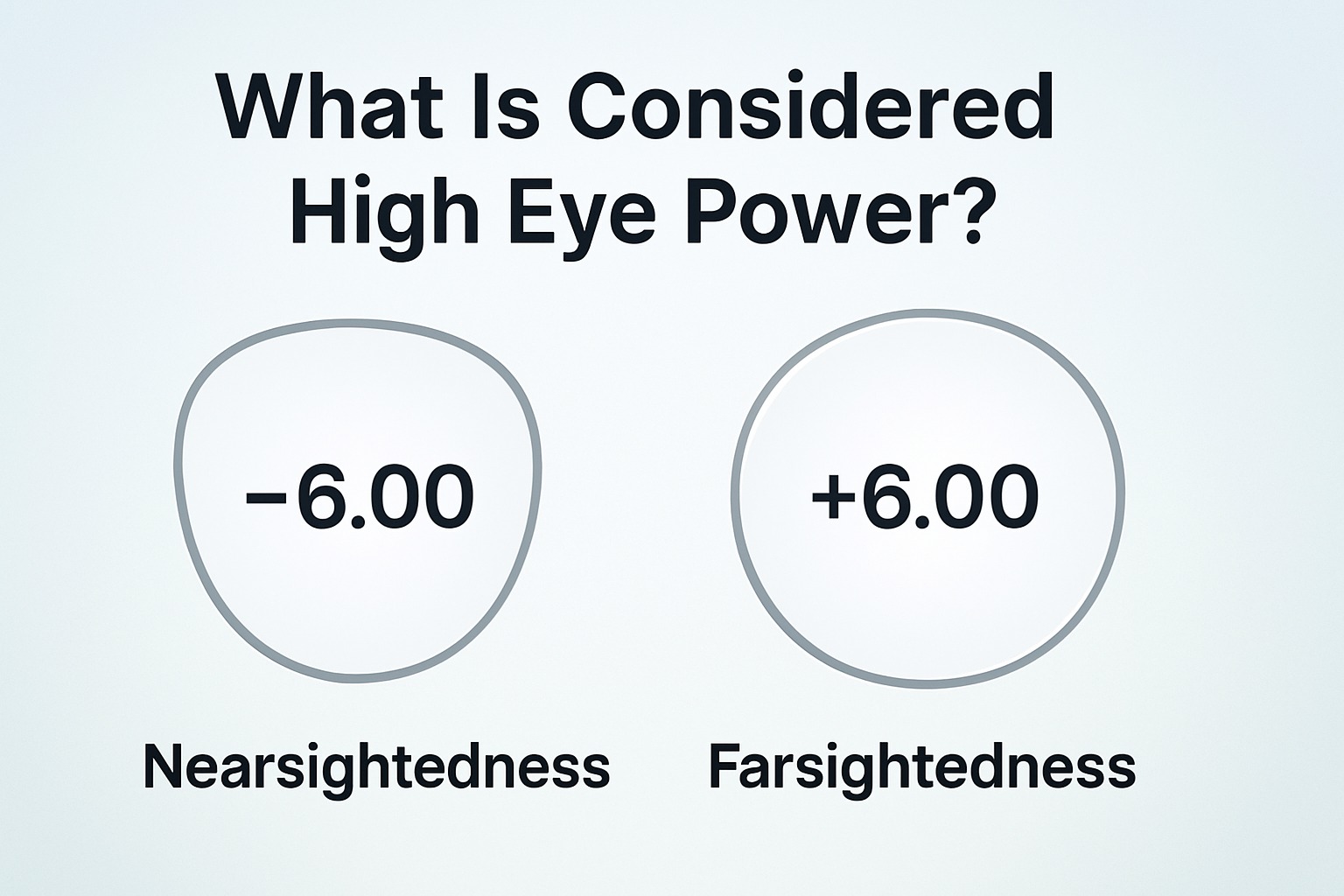
What Is Considered High Eye Power?
In clinical terms:
- Mild myopia: up to -3.00
- Moderate myopia: -3.00 to -6.00
- High myopia: above -6.00
- High hyperopia: above +4.00
- High astigmatism: above 3.00 cylindrical power
LASIK has upper treatment limits, and these limits depend on:
- Corneal thickness
- Corneal shape
- Pupil size
- Eye health
- Technology being used
Spherical power corrects nearsightedness or farsightedness, while cylindrical power corrects astigmatism. Both are equally important in deciding LASIK eligibility.
Is LASIK Safe for High Power Eyes?
Yes, LASIK can be safe for high power eyes, but only after strict medical evaluation. With modern laser technology and experienced surgeons, many high-power patients achieve excellent results.
Safety Highlights:
- Advanced lasers allow more precise correction
- Improved diagnostics reduce surgical risks
- Customized LASIK improves outcomes for strong prescriptions
Success Rate:
Patients with high power may not always reach “zero power,” but significant improvement in vision is very common.
Risks Unique to High Power:
- Slight under-correction
- Possibility of regression over time
- Higher chance of needing enhancement surgery in the future
This is why consultation with the best ophthalmologist in thane is extremely important for accurate guidance and safe outcomes.
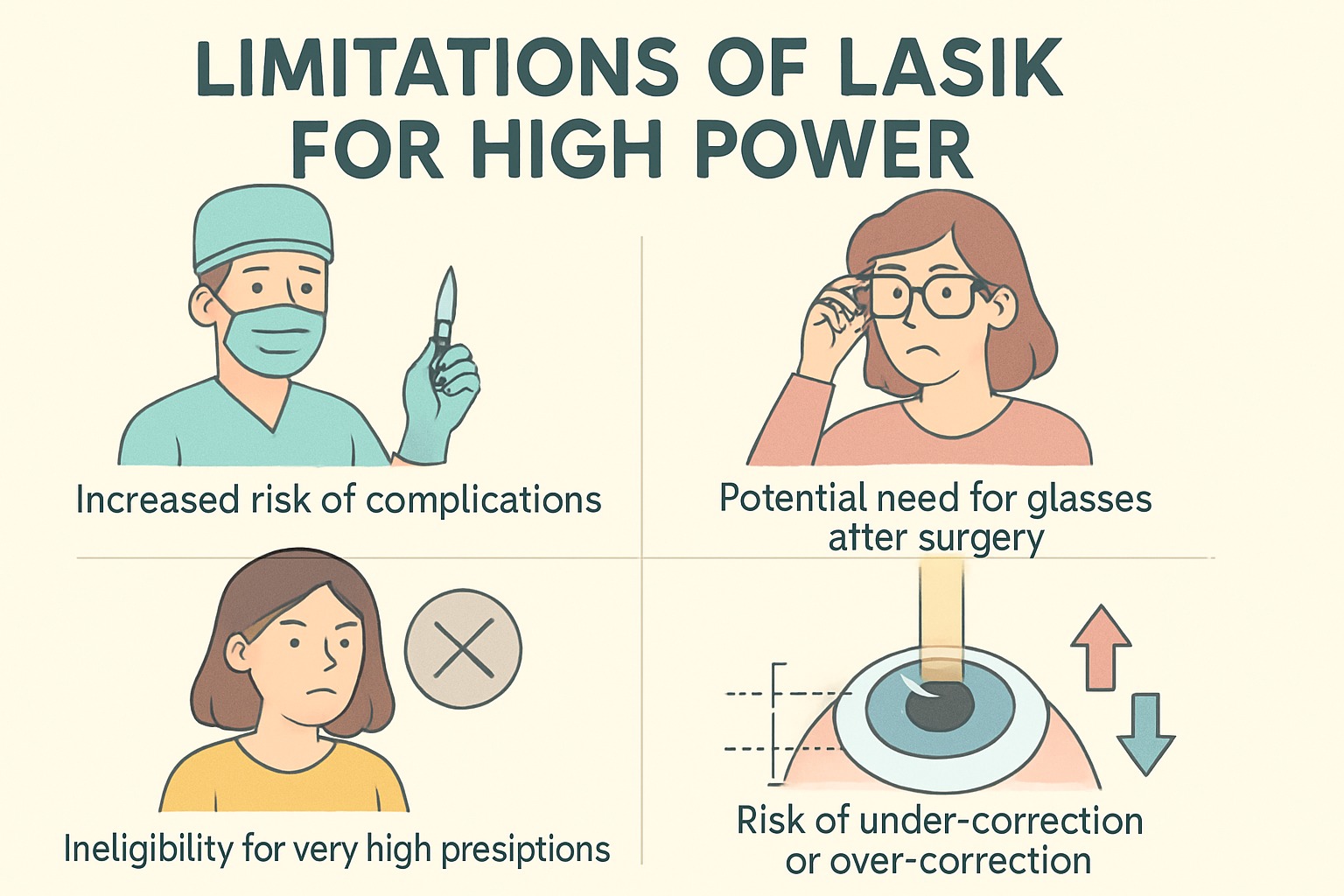
Limitations of LASIK for High Power
Not every high-power patient is an ideal LASIK candidate. Limitations include:
- Thin cornea: Not enough tissue for safe reshaping
- Dry eye risk: LASIK can temporarily worsen dryness
- Night vision issues: Halos and glare may occur
- Higher enhancement rates: Touch-up surgery may be needed after a few months
These limitations do not mean LASIK is unsafe — they simply underline the need for careful case selection.
Who Is NOT an Ideal Candidate for LASIK with High Power?
You may not be suitable for LASIK if you have:
- Unstable spectacle power
- Extremely thin corneas
- Keratoconus (weak corneal structure)
- Pregnancy or breastfeeding
- Autoimmune disorders like rheumatoid arthritis
In such cases, your doctor may recommend alternative procedures that are safer and more effective.
Best Alternatives to LASIK for High Power Patients
If LASIK is not suitable, several advanced alternatives are available:
1. SMILE (Small Incision Lenticule Extraction)
A flap-less laser procedure with faster healing and less dry eye risk.
2. PRK (Photorefractive Keratectomy)
Ideal for patients with thin corneas; surface-based laser treatment.
3. ICL (Implantable Collamer Lens)
A lens is implanted inside the eye without removing corneal tissue — best for very high power.
4. Refractive Lens Exchange (RLE)
The natural lens is replaced with an artificial lens, suitable for extreme prescriptions.
Your eye surgeon will decide the best option after detailed testing and lifestyle assessment.
Pre-Surgery Tests Required for High Power LASIK
Before approving LASIK for high-power eyes, the following tests are mandatory:
- Corneal topography: Measures corneal shape
- Pachymetry: Measures corneal thickness
- Retinal examination: Checks retinal health
- Tear film analysis: Evaluates dry eye risk
These tests ensure long-term safety and visual stability.
Recovery and Results for High Power LASIK
Recovery Timeline:
- Vision improves within 24–48 hours
- Most patients resume normal work in 2–3 days
Vision Stabilization:
- Final vision usually stabilizes in 3–6 weeks
Follow-up Schedule:
- 1 day
- 1 week
- 1 month
- 3 months
Long-Term Results:
Most patients experience lasting visual improvement, though mild regression can occur in very high power cases over the years.
Cost of LASIK for High Power in India
The cost of LASIK for high power in India generally ranges from ₹90,000 to ₹1,50,000 for both eyes, depending on:
- Laser technology used
- Surgeon’s experience
- Hospital infrastructure
- Pre- and post-operative care
- Whether enhancement surgery is included
High power cases may cost slightly more due to advanced customization and safety requirements.
Expert Opinion – What Eye Specialists Recommend
According to Dr. Ruchika Kedia, accurate diagnosis and personalized treatment planning are more important than the procedure itself. Technology selection plays a major role in minimizing complications and maximizing visual clarity.
If you are searching for a reliable ophthalmologist in thane or even the best optometrist in thane it is crucial to choose a clinic that offers comprehensive eye evaluation and advanced refractive surgery options.
For trusted consultation, you can also explore Best Eye Doctor in Thane
And for verified location access for a doctor of eye in thane you may use this map:
Role of an Optometrist in LASIK Evaluation
An experienced optometrist in thane plays a key role in pre-LASIK screening by:
- Measuring accurate spectacle power
- Detecting early corneal irregularities
- Identifying dry eye conditions
- Measuring accurate spectacle power
- Coordinating referral for surgical assessment
Choosing the optometrist in thane ensures that only safe candidates proceed for surgery.
Conclusion
LASIK can be a safe and effective solution for patients with high power numbers but only when proper medical screening, modern technology, and expert surgical care come together. While not every high-power patient is suitable for LASIK, excellent alternatives like SMILE, PRK, and ICL ensure that most people can still achieve freedom from glasses.
The most important step is a personalized eye evaluation, because your eye structure is unique and deserves individualized care